Showing posts with label collection reviewed. Show all posts

Thursday, September 29, 2022

#43 The Fourth Wise Man

 The Fourth Wise Man (1985)

directed by Michael Ray Rhodes

written by Tom Fontana


Based on an 1896 story by Henry Van Dyke, the film presents the life of a fourth magi who, after saving the life of a stranger, is unable to meet up with his three fellows on their trip to Bethlehem. Instead, he finds himself caught up in the Slaughter of the Innocents and eventually attached to a community of lepers. Every time he picks up his search for the messiah, he misses Jesus, sometimes by days, sometimes by months. Even in the end, an aging, sickly man, he cannot find Christ - until he does.
Martin Sheen plays the magi, Artaban, and Alan Arkin plays his slave, Orontes. Their relationship is well done and these two extremely talented actors bring more life to the material than seems possible. The film is the product of Fr. Ellwood Kieser's Paulist Productions, the same operation that created the tv show Insight.
The movie was surprisingly alright. Despite a certain cheapness to the production and obviousness of some of the screenplay, it hit its targets pretty well.
The thing is, we're not going to keep it. There's not a lot of chance we'll throw it on again and it's available for cheap on the production company's website.
verdict - not a keeper, but it's worth checking out if you can


Martin Sheen and Alan Arkin


Wednesday, April 20, 2022

#41 All About Eve

All About Eve (1950)

directed & written by Joseph L. Mankiewicz


"Fasten your seat belt. It's going to be a bumpy night"

So says All About Eve is a tour de force about an aging stage actress, Margo Channing (Bette Davis), and a fan, Eve Harrington (Anne Baxter), who insinuates herself into Channing's life. On the surface, it's a backstage tale of actresses, playwrights, and critics. It's also about how we sabotage ourselves - Margo is a talented actress, but she's convinced she's aging out of the great roles and it helps make her susceptible to the blandishments of Eve. It's also one of the bitchiest movies ever, filled with sharp-tongued retorts, witticisms, and sarcastic quips.
Bette Davis is someone who could be great and could be terrible. She turned into a pitiful caricature eventually, reduced to starring in campy trash (and I say this as someone who loves Whatever Happened to Baby Jane? and Hush Hush Sweet Charlotte). In this she's great, balancing between a self-assured star and an insecure mess.

Anne Baxter is good, too. I'm really only aware of her from The Ten Commandments and her spot on Columbo. Her deft turn from sycophant to master manipulator is excellent.

At the pinnacle of his most suavely evil, George Sanders (one of my favorite actors) as the critic Addison DeWitt is perfection. His interaction with Marilyn Monroe (in one of her earlier performances) as a ditzy actress is hilarious. His demolition of Exe is practically Satanic.
Among the rest of the cast standouts are Thelma Ritter, who's always good, and Celeste Holm.
I'm not the biggest Bette Davis fan, but she's so good here and gets to deliver some plummy lines. The script and dialogue in this movie are so good they really make me despair at the crappiness of so much of what Hollywood spews out these days.
verdict: a keeper

Click HERE to read the Facebook comments


#40 Baby Boom

Baby Boom (1987)

directed by Charles Shyer

written by Nancy Meyers

Charles Shyer


We almost didn't finish watching this. The score by Bill Conti and the first half of the movie, written by Nancy Myers, is not really good. It was only when we started talking about how much we disliked what we watched that we both remembered sort of liking the second half. So we went back and found it adequate.
It's a nice snapshot of a certain period in time as women were moving up in the corporate world and seemingly faced the choice of career or motherhood, but not both. The great solution of the movie is the answer it posits; why not both, and what would that look like?
For those who can't recall the film, Diane Keaton is a sharp, successful executive who, right after she's put up for a partnership with a warning it'll mean not having a family, finds herself saddled with a baby. Suddenly she turns into a scatterbrained, harried mess and quickly finds herself outmaneuvered by her younger, male assistant (James Spader) and pushed out of the firm.
That leads to the main problem with Baby Boom. There's some good, serious stuff about women and men in business, and Keaton, someone I don't particularly find convincing as anything often, is totally on target here. Then the movie shifts to moments of cheesy low comedy - the interviews with nannies, baby shenanigans - and they don't work alongside the more serious moments. There's a dissonance in the movie that keeps it from ever achieving a coherent tone.
Once pushed out of the corporation, Keaton and baby move to a dilapidated farm in Vermont where she finds empowerment, success, and love. It's not as cheesy as that sounds, and its mix of fish-out-water and Hallmark-style love story with Sam Shepard as the local veterinarian, it's pleasantly charming. It's a minor movie, but it's got adequate heart, overall fun performances from Keaton and Shepard, and, even though it never feels like more than a decent tv movie, it's a fine snapshot of a certain time and place that's already fading into the past.
verdict: keeping it for now, but I'm not sure we'll actually ever go back to it, but it's in a slim case, so it doesn't take up much shelf space

Click HERE to read Facebook comments


#39 Assault on Precinct 13

Assault on Precinct 13 (1976)

directed & written by John Carpenter


Carpenter's second movie is a trashy homage to one of the greatest Westerns, Rio Bravo (1959, dir Howard Hawks). A curiously multi-ethnic gang in LA is put out when some of the members are gunned down by the police. Retaliating, they go on a murder spree that culminates in the siege and titular assault on an isolated police station that's closing down and is only protected by a skeleton crew.
Carpenter, especially when his budget's tight, knows how to get the most out of the situation. The action scenes are tense and it always looks like there's a big horde attacking the station than I suspect there really was. He also knows how to really jolt the audience with creepy, disturbing scenes that don't rely on gore or cheap jump scares. The ice cream truck sequence is famous for a reason - 46 years later, it's still a heavier jolt than anything in a dozen torture-porn horror movies because it gets the idea of real fear, not just cheap Grand Guignol carnage.
The movie benefits greatly from its solid b-movie cast, particularly Austin Stoker as Lieutenant Ethan Bishop, Darwin Joston as Napoleon Wilson, and Laurie Zimmer as Leigh. The villains, as befits a movie partially inspired by Night of the Living Dead (1968, dir George Romero), are largely faceless and personality-less. Instead, they're largely a sadistic murderous horde.
Assault on Precinct 13 is exactly what I want in a pulp thriller; a cool setup, snappy, quotable dialogue, and great action and mayhem. I don't like a lot of Carpenter's later films, but the run from Dark Star (1974) through They Live (1988), is fantastic.
Verdict: keeping it

Click HERE to read Facebook comments


#38 Apollo 13

Apollo 13 (1995)

directed by Ron Howard

written by William Broyles Jr.


This is another movie I avoided for years. Except for Splash, he hadn't made a movie I really liked. Looking over what he made after Apollo 13, he hasn't made anything else I really like either (save, sort of, The Missing). I find his movies generally middling affairs at best. So, when Hallie bought it for me I was reluctant to watch it. I'm glad I did.
Apollo 13 is a good, old-fashioned adventure movie about real heroes. The crew of Apollo 13 faces near-certain death when their spaceship experiences a catastrophic system failure. The movie does a good job introducing the astronauts (Tom Hanks, Gary Sinise, Kevin Bacon, and Bill Paxton), their families (Kathleen Quinlan in particular), and the mission control team Ed Harris and Clint Howard). It switches back and forth between them and the tension as disaster nears is intense. Even knowing the basic history and having seen the movie before, it's still a hell of a ride.
I'm not the biggest Tom Hanks fan and I definitely reject any of the stuff that went around about him being the new Jimmy Stewart. I think he's a good light comedian (Joe vs. the Volcano, 1990, dir/written John Patrick Shanley is one of my favorites) and that he's done some solid dramatic work (Castaway), but I find a lot of his work as meh as some of the movies he's done. He's starred in a lot of prestige Oscar-bait movies that don't bear up. I don't even like Saving Private Ryan (watch Band of Brothers, instead, and see a true story that isn't filled with cheap moments - Look! The same Nazi we let go is trying to kill us now). Here, he's good, very good. He's terrific playing the commander who has to keep a level head and hide his own fear to keep his two crewmen steady.
What I really love about Apollo 13 is it's about real, true-to-life, American heroes. Hanks, Paxton, and Bacon all do good work bringing to life men who had already risked their lives thousands of times as military pilots for years before launching into space. It's not as concerned with the personalities of the astronauts as The Right Stuff (1983, dir. Philip Kaufman), but it does a better job showing in great detail the technical aspects of what they did and went through.
verdict: a keeper

Click HERE to read the Facebook comments


#37 Ant-Man and the Wasp

 Ant-Man and the Wasp (2018)


directed by Peyton Reed

Written by Chris McKenna
Andrew Barrer
Gabriel Ferrari


I liked the first one and I like this one. It's just as funny, the action's as exciting, and the visual gags are clever. Again, this is ephemeral fluff, but there should always be a place for that sort of movie.

verdict: keeper

Click HERE to read Facebook comments


#36 The Carpenters - Gold

 The Carpenters Gold (various years)


What can I say to some of you, I love the Carpenters. Karen Carpenter was an amazing singer, as no less than Kim Gordon and Elton John have said. I was dismissive of the Carpenters until Hallie almost forced me to listen to them. It was absolutely worth it. Karen Carpenter's voice is perfect and clear, and still capable of great depth.
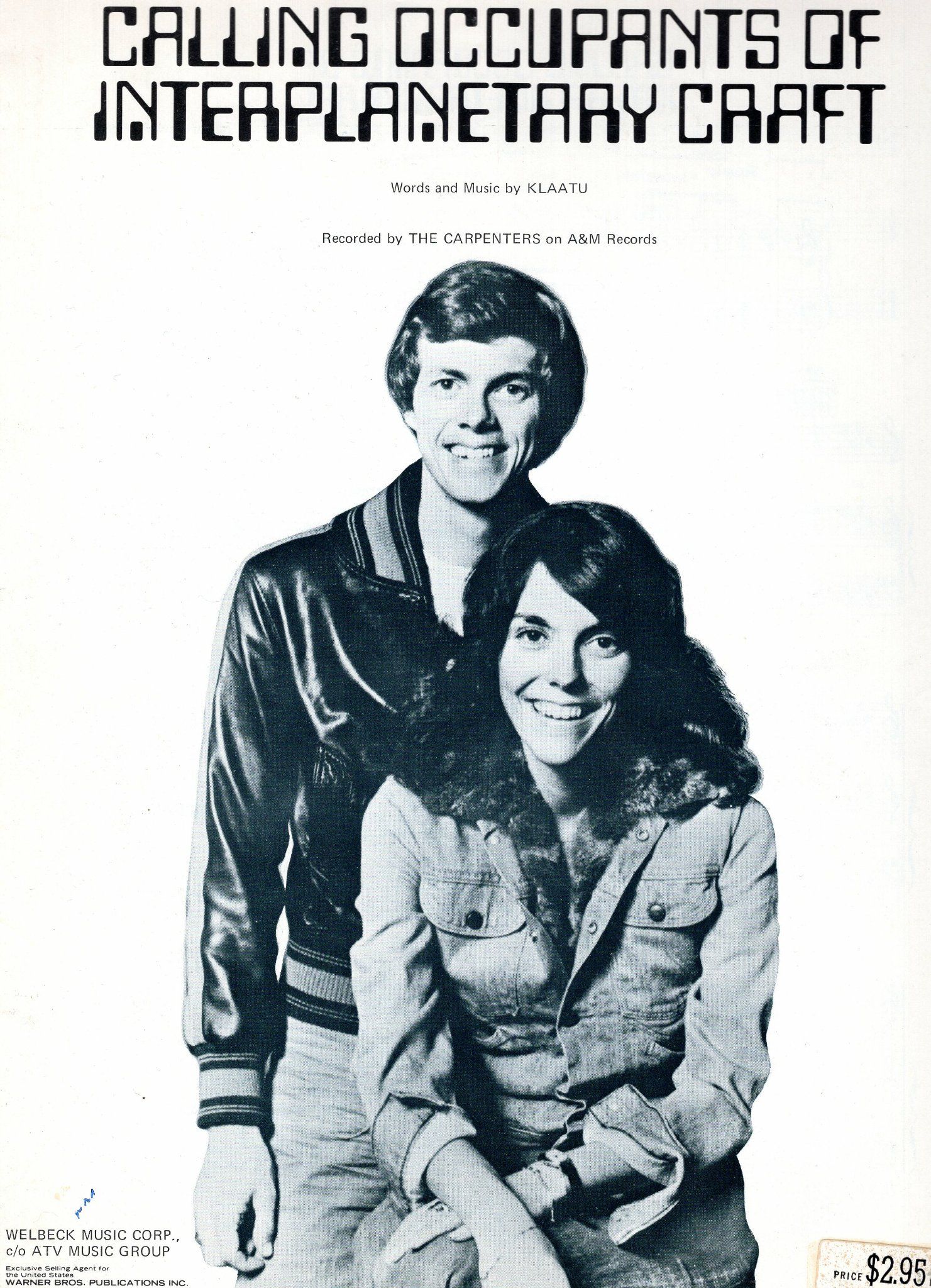
I'm not always fond of Richard Carpenter's arrangements, but he had an uncanny ear for choosing songs. From Leon Russell and Bonnie Bramlett's haunting, groupie song, "Superstar," to the poppy-perfection of "Please Mr. Postman," to the loopiness of "Calling Occupants of Interplanetary Craft," he could find the songs that his sister's voice was perfect for.
When an inability to recreate studio perfection, coupled with the early stages of what would become Karen Carpenter's fatal anorexia, led the duo to stop touring, they made some of the earliest music videos to promote their records. Stylistically, their videos vary, ranging from goofy story-telling sorts to "live" performances, to staged walks thru Disney Land. None of that really matters; the beauty of Karen Carpenter's voice is undebatable and undeniable.
They were pegged as clean-cut and perfect American kids. It was enough to get them dismissed as plastic and inauthentic. That was the fault of the label and didn't reflect the reality of Karen and Richard Carpenter. Fortunately, I'm old enough that all that sort of crap doesn't mean a thing to me anymore.
verdict: a keeper

Click HERE to read the Facebook comments


Tuesday, February 22, 2022

#33 Chinese Super Ninja, aka Five Elements Ninja

Chinese Super Ninja (1982)

directed by 
screenplay by
Chang Cheh and Ni Kuang

Another movie from Hong Kong's over-the-top director of somewhat fetishized bare male chests and arms, Chang Cheh. There are some splendid moments when the various elemental ninja forces fight, and Lo Mang is always a welcome presence in a kick flick, but overall the movie is meh. The plot involves Japanese martial artists who believe they've been wronged by a Chinese martial arts school and connive with another Chinese school to destroy the first. There's spying and killing and lots, and lots and lots (and lots!) of very vibrant blood splashed all over the place and a few fantastic fight scenes, but overall, the movie isn't worth our keeping it.

Lo Mang


#32 All Quiet on the Western Front

All Quiet on the Western Front (1930)

directed by 
written by
Maxwell Anderson (adaptation & dialogue)
George Abbott (screenplay)
Del Andrews (adaptation)


It was only a few years ago that I learned All Quiet on the Western Front author Eric Maria Remarque only spent six weeks on the front before being wounded and invalided out of service. The result was one of the most well-known anti-war novels. On the other hand, Ernst Junger spent years four years at the front, was wounded seven times, and from his diaries wrote Storm of Steel. While not exactly pro-war, it's about as near as any book I've ever read has come. It's a fascinating contrast and I recommend both books completely.
I never saw this movie in my younger years, coming to it only as an adult and after I'd seen its lead, Lew Ayres, in Holiday. That's a Cary Grant-Katherine Hepburn predecessor to The Philadelphia Story and Ayres is very funny and absolutely heartbreaking. When I learned he was in All Quiet as the lead, Paul Bäumer, I tracked it down. I'm glad I did; dated as it is in some parts, it's a gripping and emotionally effecting epic. The production involved thousands of extras, many of whom were WW I veterans, hundreds of acres were used to recreate the Western Front trenches, and tons of explosives were used. The battle scenes are amazing, all these years later. The film's greatest power lies in those huge scenes, but also in several more intimate battlefield scenes; the wounded French soldier in the shell-hole and Bäumer's reunion with Katczinsky especially.
Ayres is fine if a little too indistinguishable from some of the other young actors in the cast. Much of the script is overwrought and a little too stagey, but there's real power there. His confrontations with teach and then the old men of his town while on leave are great. In his interactions with his fellow company members, there's a believable sense of camaraderie.
The best cast member is Louis Wolheim as Katczinsky. Thickset, with a broken nose, he exudes incredible power and charisma in every one of his too few moments on the screen. I don't think I've seen him in anything else before, but this viewing of All Quiet has convinced me I need to track down some of his other movies.
Years ago, I was trying to put together a collection of the best war movies. Many of them haven't held up well - I'm thinking of The Big Red One, a movie we couldn't finish the other night - but this one does.
verdict: a keeper

Lew Ayres and Lewis Wolheim


#30 and #31 The Alamo and The Alamo

The Alamo (1960)

directed by 
written by 


The Alamo (2004)

directed by 
written by 
John Lee Hancock


We watched both of these last year, so skipped this time around. We're keeping both, as each is a solid movie, flaws and all, about a pivotal point in American history. They could both be more accurate about the root causes of the war - slavery as much as Santana's centralizing dictatorship - but there's no getting around the brutal, heroic stand of the Texican defenders.
Wayne's is the lesser of the two - it's more sentimental and rose-tineted - , but it's got gloriously epic pageantry and makes a surprising effort to honor the Mexican soldiers as brave. It's also filled with patriotic speeches, Mexican dancers, and a fun, but terribly out of place Laurence Harvey as Col. Travis. Wayne as Crockett is simply Wayne, as he too often was. Widmark is always good, but there's little sense of the shady speculator or killer in his version of Jim Bowie. Still, as big war movies go, it's solid enough (and Dmitri Tiomkin's score is excellent).
Hancock's movie strives for greater accuracy, making the three central characters more interesting through their flaws. Jason Patric is good as the drunken and increasingly debilitated Bowie, dreaming all the time of his dead wife. Patrick Wilson is solid as the wife-deserting Travis. Billy Bob Thornton is the best, though, as Crockett. He's good at portraying Crockett's effort to live up to the heroic aspect of his reputation without succumbing to its lures. Unlike Wayne's hagiographic version, Thornton's Crockett is a man caught up in a fight he definitely didn't plan on. He brought his men to Texas hoping to make a dollar and not have to fight any battles. As to Crockett's final moments, it's been a matter for debate since 1836, and it seems most likely he went down fighting, but I like how it's done here and drives home the brutality with which Santa Anna handled the rebellion. The music by Carter Burwell is alright but definitely suffers in comparison to Tiomkin's.

verdict: a pair of keepers

Widmark, Wayne, and Harvey

Wilson, Thornton, and Patric


Monday, February 21, 2022

#29 - 7 Men from Now

7 Men from Now (1956)

directed by 
written by 

The first of seven Westerns Boetticher made with Randolph Scott. As much as I love most of them (The Tall T and Ride Lonesome are two of the best Westerns), 7 Men from Now is a disappointment on rewatching. Scott is great as a man hunting the seven men responsible for his wife's death. Lee Marvin is very good as a man of unclear loyalties. As is true of all these movies, it's tight and economical, but unlike the others, it's saddled with a soggy love story and a poor score. The ending is soft and detracts from the hardness the film otherwise strives for.
I never "got" Randolph Scott until I saw him in Sam Peckinpah's magnificent Ride the High Country (1962). I'll write about that one down the line, but suffice it to say, Scott retired after filming it, supposedly considering it a perfect way to end his career (he was also worth a reputed $100 million).
When I discovered the Boetticher movies, I really got Scott. He's the strong, silent Western hero apotheosis. Pushing sixty and still looking like he could snap most men in half, he's got power and dignity on the screen that makes his performances as strong-willed, driven men of experience completely believable.
Walter Reed is fine as the eager Easterner making his way with his wife to California. As his wife, Gail Russell is a little too teary-eyed and comes across as way too eager to jump Scott's bones the first chance she gets. It's all very cheesy and really detracts from the rest of the film.
verdict: we're going to keep it so I have all the Scott-Boetticher films, but it is flawed.

Randolph Scott


#28 - 20,000 Leagues Under the Sea

20,000 Leagues Under the Sea (1954)

directed by 
screenplay by 


I have no idea when I first saw this. I might have been only four or five and I loved it. Every other time I watched it I loved it, as well. At first, the obvious star was Captain Nemo's ship-sinking submarine, the Nautilus (and maybe the squid). As I got older, James Mason as the enigmatic Captain Nemo came to the fore. Peter Lorre and Kirk Douglas (!!) as the comic relief, I always found funny, Douglas' song is goofy, but it works in keeping him comical. When Hallie and I belonged to the Disney Movie club for a little bit, it was one of the first movies I bought on Blu-ray.
We're going to keep it - Mason is still one of the great screen villains and Kirk Douglas is still, well, Kirk Douglas (as is Peter Lorre), but overall, the movie just isn't quite great as my memories make it.
Jules Verne's novels always defeated me because they're filled with long dull sections and the movie mimics that. There's an undersea harvesting scene, turtle-catching, a tour of the Nautilus and an explanation of its power source. It may not take up a lot of the film, but it sure feels like it does.
The action set pieces are still exciting. Douglas and Lorre being chased by natives and, of course, the squid attack are good boys-adventure fun. Coupled with the cool design of the Nautilus, all jagged and goggle-eyed, they're a large reason the movie remains enjoyable, if not as great as my memory wants it to be.
Leading man-era James Mason is the perfect decoction of unamused contempt for world and its conceits. When Nemo speaks dismissively of Ned's (Kirk Douglas) concerns for the sailors on the ship the Nautilus sinks it's chilling. There were few actors who be as cold and heartless sounding as Mason could. Eddie Izzard did a routine where God sounded like James Mason and it makes perfect sense. That Mason is also stunning with his short beard and white-streaked hair doesn't hurt.
A wild part of 20,000 Leagues is Nemo's motivation and goal. When torture at the hands of the English failed to uncover his secrets, his wife and children were killed and he was imprisoned. He and other prisoners escaped and set out to strike a blow against the colonialist empires of the world. That's a pretty radical premise for a Disney movie, especially in 1954.
verdict: as I said, a keeper

James Mason


#26/#27 - 2001: A Space Odyssey and 2010

2001: A Space Odyssey (1968)

directed by 
screenplay by
Stanley Kubrick

2010 (1984)

directed by Peter Hyams
screenplay by Peter Hyams


We just rewatched these a few months ago so felt no need to do so again. They're both keepers. 2001 is the story Kubrick wanted to tell; one focused on aesthetics, design, and special effects. There's a veneer of intellectual depth that hides a paucity of story, and nonetheless, I've come to like it. Better than almost any other sci-fi movie, it gets at the vast, emptiness and loneliness of space and the strangeness of any real aliens we might meet. The design work is absolutely brilliant and all these decades later the effects still look realistic. Though the main actor on screen, Keir Dullea isn't real star - the real stars are Daniel Richter as Moonwatcher, the main monkey man, and Douglas Rain as the voice of the computer, HAL 9000.

2010 is the story Arthur C. Clarke, writer of both movies' underlying stories, wanted to tell; a tale of the endless possibilities for humanity among the stars, of the need, and possibility, of humanity uniting to avoid destroying itself, and the nuts and bolts of space travel. Again, it's a movie I like a lot. Not being directed by Kubrick, it's a much more human and emotional movie. Roy Scheider, Bob Balaban, and John Lithgow are all great as the American crew, and Helen Mirren and Elya Baskin are equally good as Soviet crew members. I find the anti-war, peacenik stuff overdone and dated, but the sentiment is noble. It's the hard science-fiction stuff I love best in the movie. The portrayal of the Soviet ship Leonov and its arrival and flight is the sort of real science I'd like to see more often on the screen.
verdict: both keepers

   Daniel Richter                            -        Natasha Shneider and Roy Scheider


#25 Foreign Correspondent

Foreign Correspondent (1940)

directed by 
Written by
James Hilton (dialogue)
Robert Benchley (dialogue)

Screenplay by

  
If I have a favorite director, it's Hitchcock. His movies, across the decades, are original, brilliantly put together, smart & clever, filled with amazing performances, and all, even the least ones, worth watching. I remember hearing two store clerks rave about Kubrick but dismiss Hitchcock as a mere master of gimmickry. I had to get out of that store fast. There's simply no comparison. Too many of Kubrick's movies are cold, soulless That's why I own thirteen Hitchcock (actually, more. I have a boxed set somewhere of all his early films) movies and only two Kubrick.
Foreign Correspondent, I think, often gets overlooked, coming as it does right after his first American movie, Rebecca, and that's a shame. Mechanically, it's a smashing thriller, replete with memorable set pieces, most notably the umbrella scene and the windmill. The plane crash over the ocean is pretty harrowing, too (It was designed by the brilliant William Cameron Menzies).
Joel McCrea is great fun as the American crime reporter dispatched to Europe in August 1939 to cover the looming war. He becomes entangled in a plot involving a Dutch diplomat (Albert Basserman), Nazi spies (Herbert Marshall, Eduardo Cianelli, and Edmund Gwenn), a beautiful girl (Laraine Day), and a charming (and scene-stealing) British reporter (George Sanders). Marshall and Sanders are just damn cool, uttering every one of their lines with a dryness and wryness that is just perfection.
I can't remember when I first saw this. It might have been as long ago as elementary school. Whatever, it's a movie I've always loved, for the action, for the laughs (of which there are plenty), and for it's potent recreation of a feeling of impending catastrophe as Germany edges the world toward chaos.
The movie, written by Charles Bennett and Joan Harrison, with dialogue by James Hilton and Robert Benchley (who makes a fun appearance as a bored US reporter in London). Hitchcock went to London after the movie was completed just as the Battle of Britain was about to begin and quickly had a scene written and filmed reflecting the imminent bombing of London. Release a year and half before Pearl Harbor, the movie is a magnificent call to arms for America, practically demanding we come to grips with the Nazis.
verdict: a keeper of the first rank

George Sanders, Laraine Day, and Joel McCrea


#23 Kismet

Kismet (1955)

directed by 

written by 

This movie doesn't get a lot of love, but we love it. Famous for two songs, "Baubles, Bangles, and Beads" and "Stranger in Paradise" (like most of the music in the show it's adapted from original music by Alexander Borodin), it's got color, great sets and matte backgrounds, and above all, Howard Keel at his hammiest and Dolores Gray.
The plot is a bunch of fairytale silliness - a poor poet, because of the lies he spins to keep his daughter and himself fed, lead him to run afoul of first a bandit (Jay C. Flippen), and then the Wazir (Sebastian Cabot). His daughter (Ann Blyth) catches the eye of the Caliph (Vic Damone), and the poet himself and his wonderful lines of b.s. enthrall the terminally bored Lalume, wife of the Wazir.
Most of the other songs are solid, and, in particular Dolores Grays' two big numbers, Bored and Rahadlakum, are terrific. We're not the biggest musical watchers, but we do have a small, solid collection and this is one we're keeping there.
Verdict: a keeper

Howard Keel and Dolores Gray


#22 Ant-Man

Ant-Man (2015)

directed by  

Screenplay by


While I agree with Martin Scorcese that the Marvel movies are largely not much more than rollercoaster rides, I still dig 'em. The best of them are good fun. For me, that's Guardians of the Galaxy and Ant-Man. Too many of them are self-serious, but these two are solid comedies. They're well done to a degree that the serious bits work well without ever being too po-faced. We'll get to Guardias down the line, but this is about Ant-Man.

I've liked Paul Rudd since seeing him in Clueless. He's a solid comic actor. Aided and abetted in the comedy by Michael Pena (and T.I. & David Dastmalchian), Rudd is perfect in his deadpan funny delivery. Evangeline Lily and Michael Douglas are fine and Cory Stoll is good as the villain.
There's not much else to say about Ant-Man. The funny bits (whih are the best bits) are funny, the action is cool, and the caper-driven plot is better than most of the overblown stories of a bunch of the other Marvel movies. It's a good popcorn movie and something we throw on if we just want something silly to watch.
Verdict: keeper

Paul Rudd

#21 Andrei Rublev

Andrei Rublev (1966)
 
directed by

written by
Andrei Konchalovsky and Andrei Tarkovsky


I knew a little about the cultural importance of Andrei Rublev, the 15th cent Russian icon painter from reading James Billington's cultural history of Russia, The Icon and Axe, but I had never heard of Tarkovsky's epic film until someone mentioned it online a few years ago.
It's not a real biographical movie. Little is known of Rublev's real-life or even which icons (save two) he definitively painted. Instead, as was Tarkovsky's intention, it recreates medieval Russia and portrays the struggle of creativity under oppressive circumstances. He also wanted to show Orthodox Christianity's central role in Russian history and culture.
Andrei Rublev is presented mostly in black and white, with a prologue, eight discrete sections spread over a twenty-year period, and an epilogue showing numerous icons attributed to Rublev. The icons, shown largely in close detail are in full color.
The opening sequence depicts a man attempting to launch a hot air balloon and fly, much to the fear of a crowd of people who try to stop him. It's meant to reflect the dreamer crushed by oppression. After that, we meet Rublev and two companions who have left the Andronikov Monastery to make their way as icon painters. As each new section unfolds, we see Rublev's evolution in regards to his art and Russia. We see him secure a position with Theophanes the Greek, a master painter, while years later we see him caught in the middle of a horrific Tatar raid on the city of Vladimir. Eventually, as an old man, he finds renewed inspiration from a young church bell caster. In between these sections, Rublev debates with colleagues (including the ghost of his teacher) on the purpose of painting icons, the intelligence of the Russian people, and the nature of Christ. Rublev also has an unsettling run-in with a band of pagans during a fertility ritual.
As a portrayal of Russia still partially under the Mongol yoke and the growing authoritarianism of Moscow, the movie is brutal. Boyars (nobles) imprison and torture those who mock them, innocent men are executed, artists blinded by jealous employers, and hundred raped and murdered by Tatars and their Russian allies. In particular, the Tatar attack is almost unbearable.
Rublev is torn over what purpose his art serves. For him, it should be loving and educative. One time he is instructed to paint the terrors from the Revelation, but refuses, as he doesn't believe Christ's message should be delivered through fear. When Rublev commits an act of violence, he rejects his talents and takes a vow of silence that lasts over a decade. Eventually, seeing the great joy and wonder brought about by another artisan's work, he returns.
The movie is beautiful. It makes magnificent use of some of the real locations, including the Andronikov Monastery and the Assumption Cathedral in Vladimir. The cinematography by Vadim Yusov seamlessly switches from quiet scenes to epic ones of violence and chaos. The balloonist's flight is especially fantastic. In the aftermath of the Tatar raid, where Rublev debates the ghost of Theophanes and the addle-minded Durochka braids a dead woman's hair, haunting and incredibly powerful.
As Rublev, Anatoly Solonitsyn is so good. His depiction of the monk's struggles, both interior, and exterior, is one of the more memorable performances I've seen recently. There's true dignity on display during the scenes where Rublev defends his beliefs, and the final scene with the bellmaker is one of great power.
Ivan Lapikov as the envious Kirill and Tarkovsky's wife Irma Raush as Durochka are both captivating. Nikolai Burlyayev as the bellmaker, Boriska, is fantastic.
This is a movie I will need to watch many more times before I think I will get everything Tarkovsky was doing. The Criterion Collection Bluray I own has several insightful documentaries and commentaries that provide some insight. There's also Tarkovsky's final student film, The Steamroller and the Violin, a beautiful and sweet story of the friendship between a steamroller driver and a 7-year old boy.
Verdict: Such an absolute keeper

Anatoly Solonitsyn